

Even the best AI tool can't fix an unhealthy team dynamic
If you are like most leadership teams, you are not short on ideas. You are not short on skills either. In fact, that is what makes the problem so frustrating. Smart people, strong intentions, and all the newest tools should be enough to move the business forward. But too often, they are not.
Strategies stall because priorities shift from one meeting to the next. Decisions seem settled in the room and then quietly unravel afterward. Teams build plans that look good on paper but lack the ownership, candor, and cross-functional commitment needed to survive reality. Leaders keep refining the strategy when what actually needs fixing is the environment in which that strategy is supposed to be executed.
That is the uncomfortable truth at the center of this paper: most execution problems are not really process problems. They are organizational health problems.
Why This Gets Worse in the Age of AI
When a team is healthy, AI can help people challenge assumptions, process more perspectives, learn faster, and make better decisions. But when a team is guarded, siloed, or unclear, AI becomes something else entirely. It becomes a way to defend bad assumptions with prettier evidence and a way for every function to justify its own priorities. It creates the appearance of precision while the organization grows more fragmented underneath.
If your leadership team avoids hard conversations, lacks shared accountability, or confuses activity with progress, AI will not rescue you. It will simply help you move faster in the wrong direction.
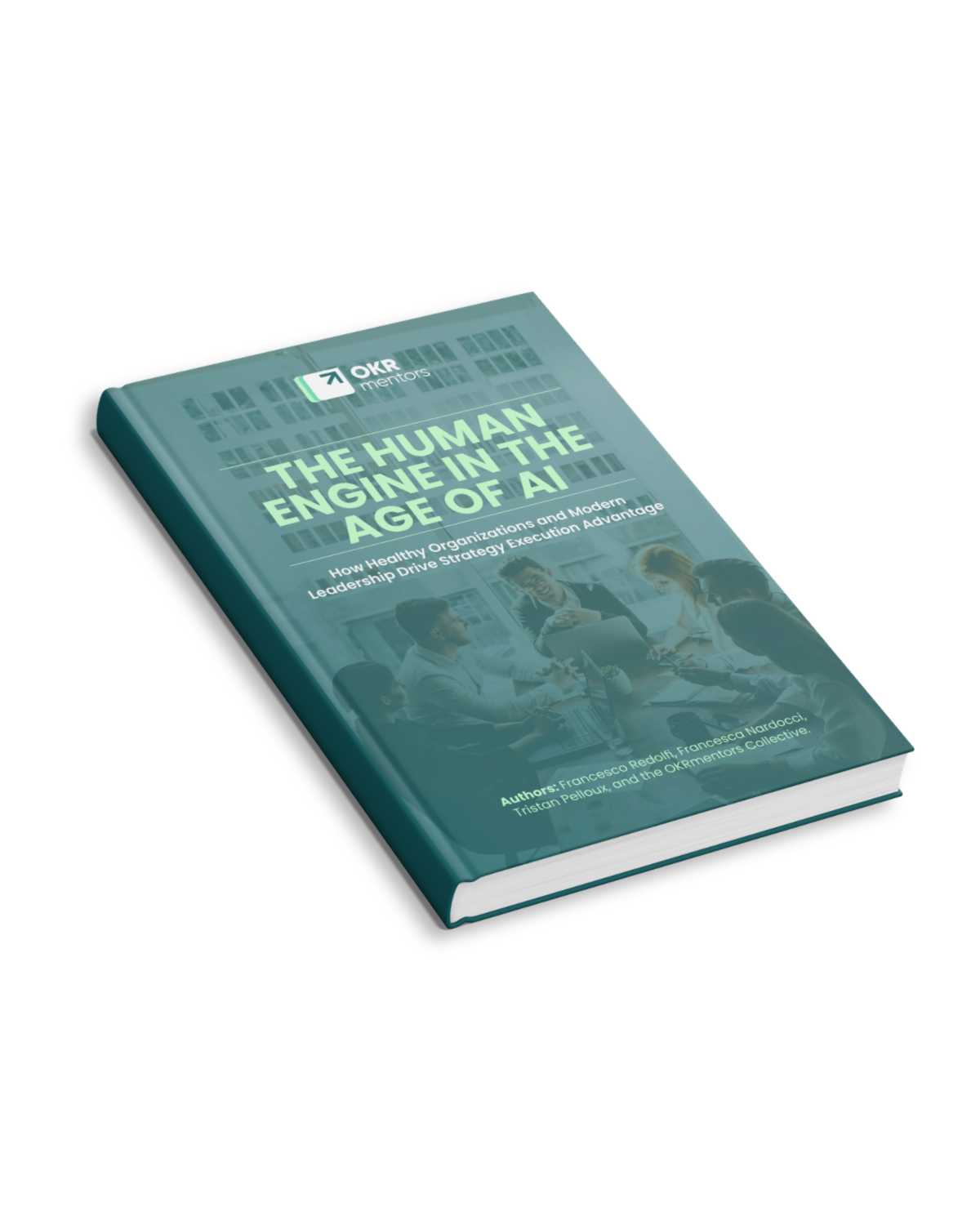
What You’ll Learn in This Playbook
This playbook shows why smart companies still lose. Not because they lack strategy, ambition, or technology, but because their leadership teams cannot sustain the kind of trust, clarity, and accountability their strategy demands.
When those foundations are weak, strategy turns into theater: polished plans, endless meetings, competing agendas, and AI-generated logic that makes bad decisions look intelligent. In other words, AI is not the cure. It is the amplifier. And if your organization is misaligned, it will help you fail faster.
Inside, readers will learn what it takes to build the kind of leadership team AI cannot replace: one that can align, execute, learn, scale, and empower without collapsing into politics, hesitation, or confusion. The playbook shows how to create real commitment, sharper decision-making, stronger ownership, and systems that reinforce execution at every level, so strategy stops dying in meetings and starts producing results in the real world.