

The Strategy Execution Maturity 360™ helps executive teams assess and improve their ability to execute strategy effectively and sustainably. It evaluates maturity across five critical dimensions.
Dimension 1: Align
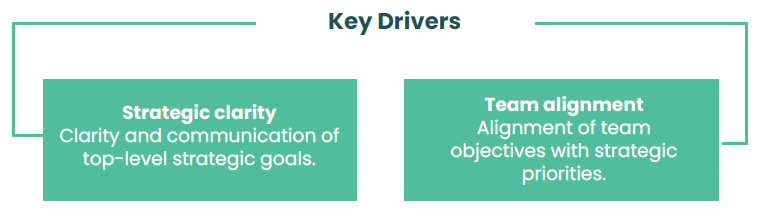
Definition: Alignment ensures that organizational priorities are clear, communicated, and understood across all teams. It establishes a shared vision and ensures all efforts are directed toward strategic objectives.
Why It Matters
Alignment fosters a unified sense of purpose. It reduces inefficiencies caused by miscommunication or misaligned initiatives and ensures that everyone is pulling in the same direction. As your organization grows, maintaining strategic coherence across functions becomes both more difficult and more essential.
Leaders at high-maturity organizations don’t just set direction; they actively reinforce alignment through goal setting, communication, and planning routines.
Without maturity in alignment, teams often duplicate efforts, waste resources on low-priority initiatives, and fail to connect daily work to strategic goals. This misdirection can lead to delayed product launches, stalled transformation programs, and a loss of stakeholder confidence.
Best Practices
- Establish quarterly leadership sessions to reconfirm and communicate top strategic priorities.
- Use a consistent goal-setting framework to align & cascade objectives throughout the organization.
- Synchronize annual and quarterly planning cycles across functions.
- Create visual strategy maps or dashboards to maintain transparency and reinforce shared direction.
- An embedded strategic narrative systematically communicated to everyone across the organization
Dimension 2: Execute
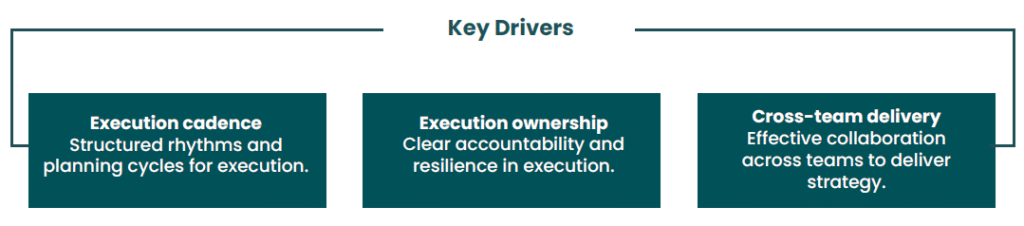
Definition Strategy Execution focuses on turning plans into measurable actions with accountability. Effective Strategy Execution ensures that teams collaborate to their objectives within defined timeframes.
Why It Matters
Strategy execution is where strategy is tested. Without clear accountability and progress monitoring, goals remain aspirational. High-performing organizations create Strategy Execution rhythms, weekly reviews, structured updates, proactive issue resolution, that keep teams focused and leaders informed.
Organizations with strong Strategy Execution often move faster and learn faster because they’re consistently measuring and managing their progress.
When execution maturity is low, objectives remain aspirational, projects drift without clear ownership, and critical deadlines are missed. Poor execution discipline can cause bottlenecks, erode cross-functional trust, and force leaders into reactive firefighting instead of proactive decision-making.
Best Practices
- Identify Strategic Initiative contributing to the company’s strategic outcomes and goals
- Assign clear ownership for every strategic initiative with defined roles and accountability.
- Consider Portfolio Management if you are for optimized strategic initiative delivery
- Implement a structured cadence of outcome progress reviews (weekly or biweekly) to maintain focus.
- Use a simple, transparent system for tracking progress and escalating risks.
- Embed cross-functional teams & check-ins to resolve dependencies before they cause delays.
Dimension 3: Improve
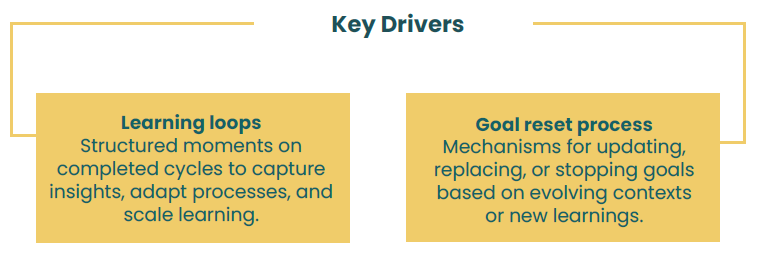
Definition: Continuous improvement ensures that lessons learned are captured, shared, and applied. A culture of reflection enhances resilience and adaptability.
Why It Matters
Improvement is the bridge between one strategy cycle and the next. Organizations that build reflection into their cadence adapt more quickly to change and avoid repeating mistakes. This is particularly important for leadership teams navigating uncertainty, as strong learning loops can be the difference between agility and drift.
Without structured improvement loops, mistakes are repeated, valuable lessons are lost, and teams struggle to adapt to changing circumstances. The absence of reflection reduces resilience, slows innovation, and leaves organizations vulnerable to being outpaced by more agile competitors.
Best Practices
- Build formal retrospectives into the end of every project or cycle (i.e. quarter, year, …).
- Document and share lessons learned in a central, accessible location.
- Keep track of improvement actions from past cycles to ensure they are implemented.
- Encourage leaders to model openness in discussing failures and learning points.
Dimension 4: Scale
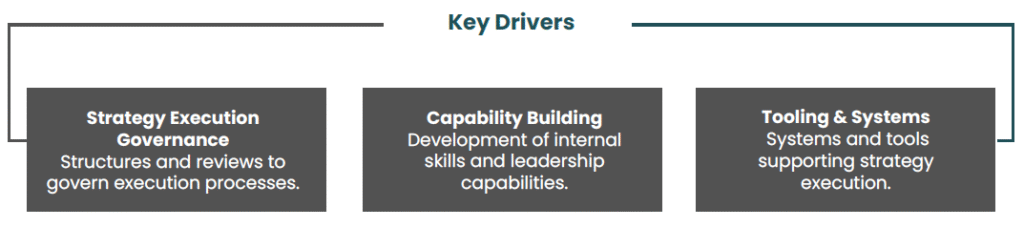
Definition: This amplifier dimension ensures that systems and processes grow sustainably with the organization. Standardized practices prevent silos, reduce duplication, and maintain cohesion as complexity increases.
Why It Matters
Growth without structure leads to inconsistency. As companies add products, markets, or teams, they need repeatable Strategy Execution practices. CEOs must ensure that what works in one part of the business can scale without compromise.
Scaling Strategy Execution maturity also means building infrastructure that supports long-term strategy delivery, such as shared OKR platforms, team onboarding, and central enablement. Without scalable systems, growth creates chaos. Processes break down, quality becomes inconsistent, and different teams reinvent solutions instead of sharing proven approaches. This limits speed, increases costs, and makes integration across new markets, products, or acquisitions much harder.
Best Practices
- Document core Strategy Execution processes and make them accessible to the whole
company. - Standardize tools and templates for planning, tracking, and reporting.
- Provide ongoing training so new teams adopt proven practices quickly.
- Invest in platforms that support consistent execution across geographies and functions.
- Leverage AI to provide data-driven and enhanced information sharing and decisionmaking.
Dimension 5: Empower
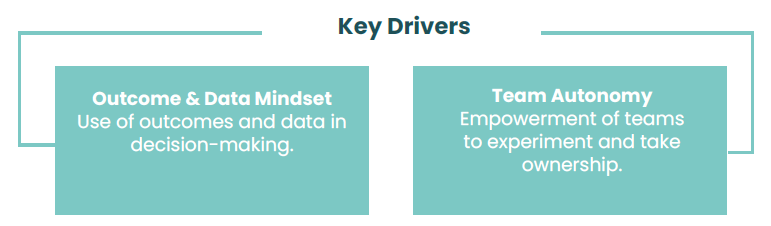
Definition: This amplifier dimension fosters a culture of ownership, collaboration, and data-informed
decision-making. It enables teams to take initiative and drive meaningful outcomes.
Why It Matters
Strategy execution doesn’t scale through control; it scales through trust. Empowered teams act faster, learn more, and take greater responsibility for delivering value. CEOs play a key role in fostering empowerment by setting clear intent, removing blockers, and promoting transparency.
Empowerment also helps attract and retain talent, particularly in fast-moving or highgrowth environments. It’s the cultural foundation for innovation and accountability. When empowerment is low, decision-making is slow, innovation is stifled, and high performers become disengaged. Teams wait for approval instead of acting on opportunities, and frontline insights are underused in shaping strategy. This creates missed market opportunities and slows responsiveness.
Best Practices
- Encourage and enable outcome-driven thinking at all levels.
- Make performance data easily accessible so teams can make informed decisions.
- Encourage experimentation with small, low-risk pilots to test ideas quickly.
- Recognize and reward initiative-taking behaviors at all levels.
- Set clear decision boundaries so teams know where they have autonomy.
Do you want to learn more and unlock the five dimensions of strategy execution excellence?