

A bold strategy can inspire, but value is created only when the idea is translated into daily action. A mature Strategy Execution system includes the core components of Strategy Operations: governance, planning cycles, OKRs, performance reviews, and the cultural norms that support decision-making and adaptability. Everything that keeps everyone moving in the same direction and learning fast enough to stay ahead of change. But what is really strategy execution and why should you measure its maturity?
What Strategy Execution Really Means
Most leadership teams start a planning cycle with a clear vision, a roadmap and revenue targets. Three months later they often discover that frontline teams are working on different priorities, progress data is patchy and cross-functional projects are slipping. Strategy execution maturity is the missing link.
Strategy Execution is not a single project plan, it is a living system that
- Connects long-term ambition with the next sprint. Strategic objectives flow into team-level goals that guide weekly decisions and day-to-day work.
- Creates fast feedback. Results surface quickly so leaders can unblock issues or adjust plans before damage spreads.
- Builds learning into the cadence. Every cycle ends with reflection so lessons feed the next iteration.
Locke and Latham’s goal-setting research confirms that specific, challenging goals in addition to regular feedback raise performance. A mature strategy execution system integrates both goals and feedback into regular operations, with frameworks like OKRs that support clarity, ambition, and consistent cadence.
These mechanisms are core to Strategy Operations, which ensure that strategic intent is consistently translated into team behaviors and routines.
Why Strategy Execution Maturity Matters
In a stable market or industry you can survive with loose coordination and heroic effort. However, nowadays in most industries, you need a repeatable mechanism that aligns hundreds or thousands of daily choices with a single strategic intent.
Organizations that master Strategy Execution:
- hit time-to-market targets more reliably,
- adapt to external shocks without losing focus,
- keep employee engagement high by giving work a clear purpose,
- scale new product lines faster because they already have a proven playbook.
Most companies that miss growth goals do not fail because the strategy was wrong. They fail because the management intention never reaches the front line. That is when a Strategy Execution maturity score can show where that chain is breaking.
Where the Strategy Execution Maturity 360™ Assessment Comes From
OKR Mentors has developed a Strategy Execution Maturity 360™ assessment that is grounded in practice, data and research.
- Field work – Ten years of projects in more than 500 organizations, including KPMG, HP, Indeed and Accor, surfaced recurring Strategy Execution patterns.
- Benchmark surveys – Over 200 leadership teams completed a structured questionnaire. Their scores were correlated with results such as revenue growth, on-time delivery and employee engagement.
- Academic foundations – Classic research on goal setting, strategy implementation and agile operating models keeps each dimension evidence-based.
Because Strategy Execution Maturity 360™ is rooted in lived experience and validated by numbers, it gives CEOs and founders a credible lens for diagnosing capability.
The Five Dimensions
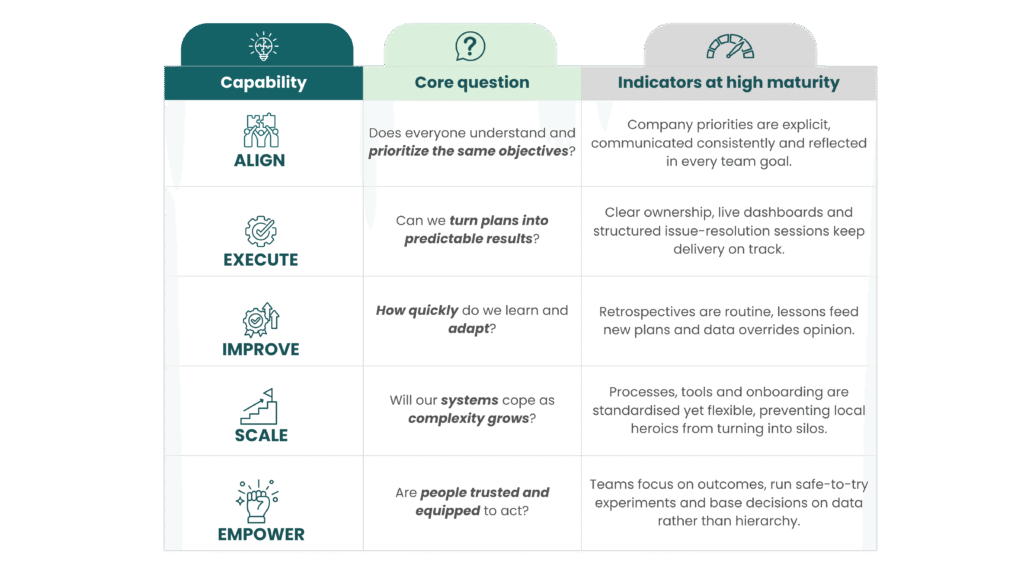
The assessment evaluates performance across five capabilities and together the five dimensions produce a 100-point maturity index.
Putting the Assessment to Work
A detailed maturity score is useful only if it drives action. It shows where Strategy Execution is thriving and where it is being held back. But its real value lies in what you do next.
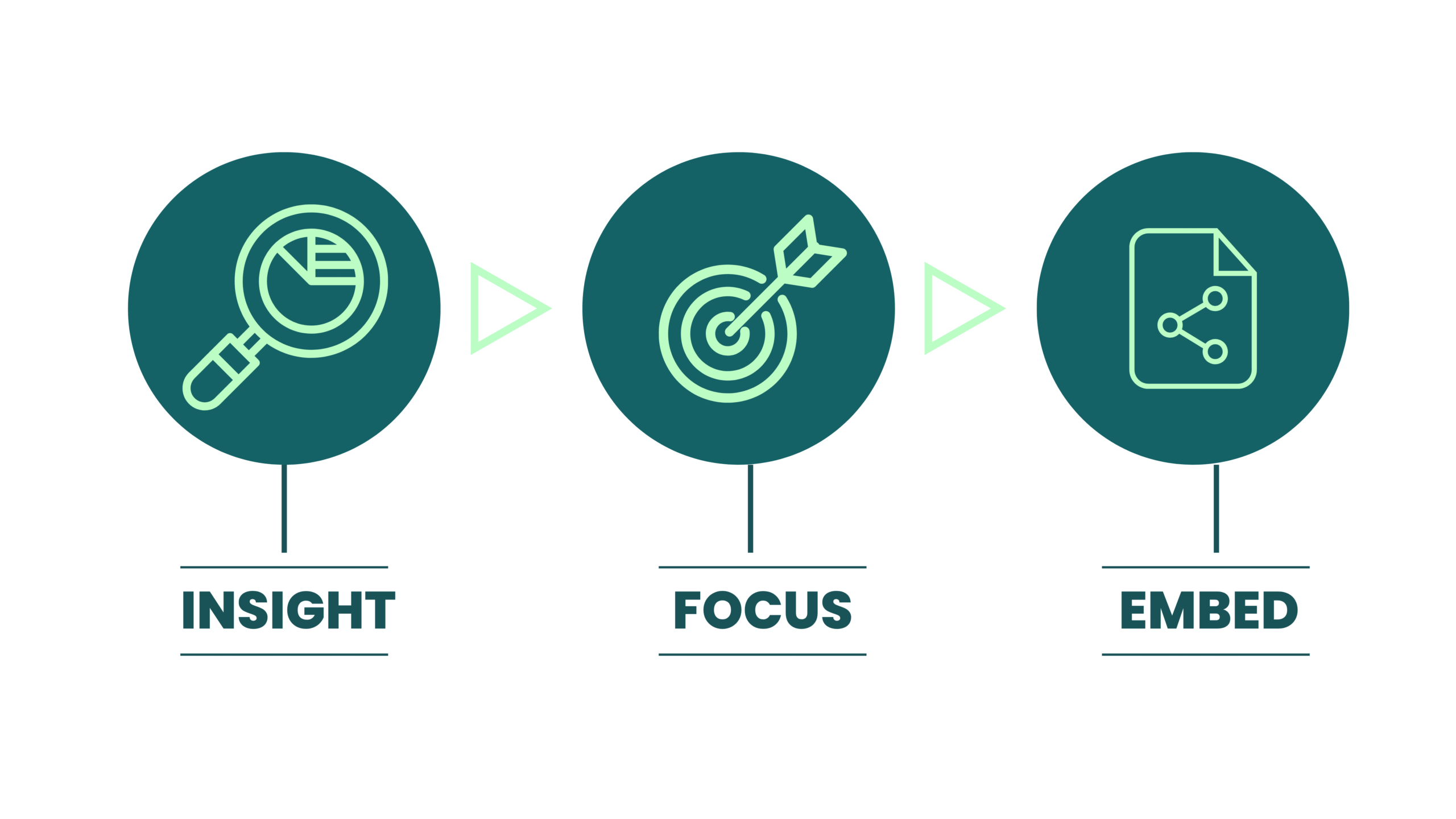
- Start with insight. Use the assessment to reflect honestly on your current capabilities. Whether through a structured assessment or informal self-diagnosis, the goal is clarity. Where are we strong, and where do we need to improve?
- Focus your energy. Strategy Execution improves fastest when teams act on a few critical gaps, not everything at once. That might mean sharpening weekly goal reviews, improving onboarding, or creating space for structured retrospectives. Each improvement compounds over time.
- Embed and evolve. Once new habits deliver results, build them into the fabric of the organization. Standardize where it helps, coach where it matters, and revisit the maturity lens periodically. As your context changes, so will your Strategy Execution needs.
Rather than a one-off diagnostic, the maturity assessment helps leaders steer with greater confidence, consistency and impact. Small, focused experiments beat big-bang change programs. Over successive quarters the organization climbs the maturity curve and the gap between vision and delivery shrinks.
Conclusion
Strategy Execution is the engine that converts bold ideas into customer value and sustainable growth. By measuring maturity across Align, Execute, Improve, Scale and Empower, leaders gain a precise picture of where that engine is strong and where it is leaking power. Tighten one link at a time, lock in the learning and repeat. Vision will turn into results more often, more quickly and with less heroic effort.