

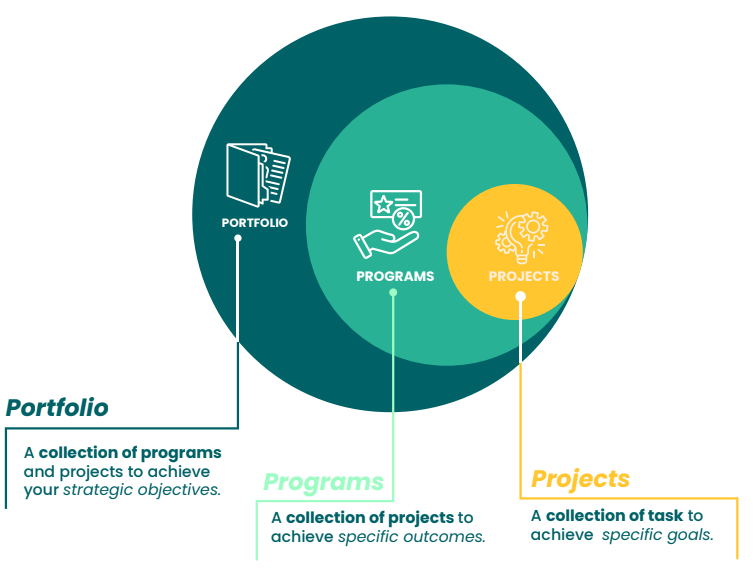
It is important to understand the differences between projects, programs, and portfolios. A project is a temporary effort with a specific goal. A program groups similar projects to manage them more effectively. A portfolio is a collection of projects, programs, and ongoing work, all managed together to achieve the company’s big goals.
What is Project Portfolio Management (PPM)?
Project Portfolio Management (PPM) is a method organizations use to evaluate and prioritize their projects. It’s about making sure these projects align with the company’s main goals and values. PPM focuses on using resources wisely, reducing risks, and making sure projects are done well and add value. This helps ensure that all projects support the company’s overall strategy and goals. PPM gives a big-picture view to stakeholders, helping them make decisions that best use the organization’s resources and keep everything aligned with business goals.
PPM is a structured way to manage and oversee projects, but it’s not without its challenges. For instance, projects are often not well aligned with the company’s strategy and resources are not well-allocated. Another big issue in PPM is that teams often lack empowerment, as most strategic decisions are made at higher levels. There’s also a focus on tracking what’s being done rather than the actual results or impact.
Common Challenges in Project Portfolio Management
The challenges in PPM usually come from how it’s implemented, like not focusing enough on outcomes, governance issues, and projects growing beyond their original scope. PPM is good at managing budgets but doesn’t always focus enough on prioritizing the most important projects. This can lead to starting projects without proper alignment, straining resources, and losing focus on key projects. Lack of standardization can cause inconsistencies, and poor communication between teams can create information silos, making decision-making harder.
Other issues include projects not aligning with the company’s strategy, leading to wasted resources, difficulty in measuring how projects impact business goals, improper resource allocation, and not managing risks well. Managing a diverse portfolio also brings challenges, such as dealing with project dependencies and conflicting priorities. Without the right tools or strategies, making sure every project supports the company’s overall objectives can be tough, affecting the portfolio’s effectiveness.
Want to learn how OKRs tacke common challenges in portfolio management and how it can be integrated?
Read through our white paper OPTIMIZED STRATEGIC EXECUTION: Combining OKRs and Portfolio Management